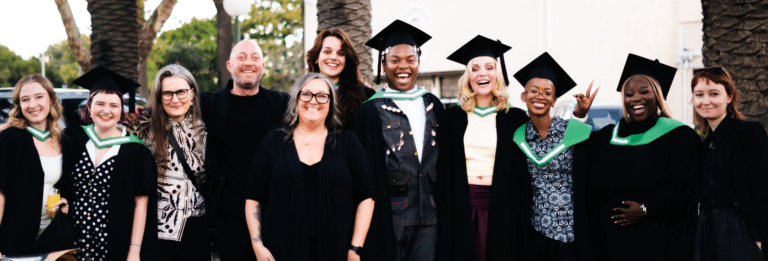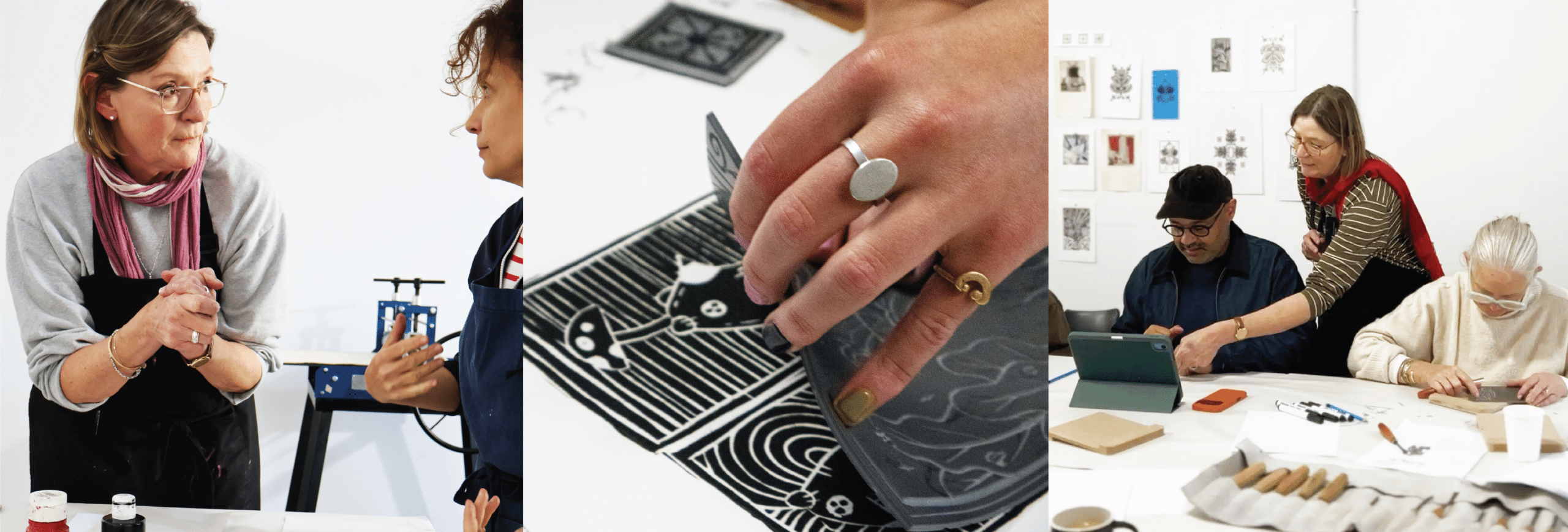
In a world increasingly dominated by instant digital rendering and glowing screens, there is a quiet revolution happening in the studio spaces at the Cape Town Creative Academy (CTCA). On Saturday, 22 August, a small group of curious makers gathered at our Silo District campus for an intensive, hands-on printmaking session and the results were nothing short of inspiring.
The session brought together participants of varying experience levels to explore carving, inking, rolling, and pressing. The workshop achieved a flawless evaluation score from participants, with 100% rating their overall experience as “Excellent” and confirming they would “Definitely” recommend CTCA workshops to fellow creatives.
what participants had to say
Rather than focusing on rigid outcomes or high-pressure technical perfection, the workshop environment prioritised creative confidence and playful experimentation.
When asked to describe their experience at the session, attendees highlighted the supportive atmosphere and creative freedom fostered within our V&A Waterfront studios:
- “Very encouraging and inspiring”
- “Immersive and relaxed”
- “Accessible, well organised, creative”
- “Excellent, fun, interesting”
- “Exploratory, non-perfectionist”
- “Loved it. And I am very pleased with what I made”
This overwhelmingly positive response reinforces why workshops Cape Town creatives choose are built around small-group mentorship, direct tactile processes, and low student-to-facilitator ratios.
The CTCA Workshop Methodology: Experiential Learning in Small Cohorts
At the heart of every masterclass hosted at the academy is the signature CTCA workshop methodology, a pedagogical approach built on experiential “learning by doing” within small, high-touch cohorts. Rather than relying on rigid instructional lectures or passive demonstrations, CTCA structures short courses as active studio incubators.
Workshops are intentionally capped at low participant numbers to guarantee direct, continuous access to master artisans and senior academics. This setup balances structured technical instruction, such as material handling, safety, and specialised tool management, with low-stakes psychological safety that encourages risk-taking and playful iteration.
By removing the fear of making mistakes and replacing it with guided, real-time feedback, the CTCA methodology ensures that every participant, regardless of skill level, bridges the gap between conceptual curiosity and confident material execution.
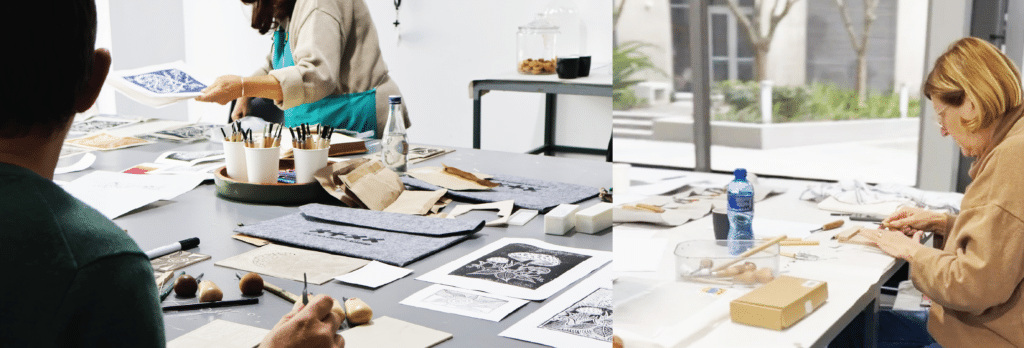
Facilitator Spotlight: Lizl Roos
Leading this successful session was visual artist and educator Lizl Roos.
Holding a BA Hons in Visual Art (Cum Laude) from the University of Pretoria, Lizl brings over three decades of higher education and student development expertise to CTCA. Having lectured at leading South African institutions, including the University of Pretoria, Pretoria Technikon (TUT), Openwindow, and currently serving as CTCA’s Student Success Advisor, her academic pedigree is matched by distinguished professional recognition.
A Merit Award winner at the Sasol New Signatures , Lizl’s artworks are housed in major corporate collections across South Africa, including Absa, Telkom, Sasol, and the University of Pretoria. Her deep understanding of material processes and nurturing pedagogical approach made her uniquely qualified to guide attendees through the intricate art of relief printing.
5 Questions with Workshop Facilitator Lizl Roos
1 / You have over 30 years of experience in visual arts education. What makes printmaking such a powerful medium for beginners and experienced artists alike? Printmaking is a remarkable and versatile technique. For beginners, it offers immediate rewards: you make a mark, roll out ink, pull a print, and experience something magical. The fear of a perfect final print fades, as the technique allows for amazing visual results. For experienced artists, the approach can be more complex. It involves experimenting with lines, mark-making, layering colours, embracing the unplanned and finding creative solutions to stunning final prints. The unpredictable nature of printmaking keeps artists curious.
2 / Participants described the workshop atmosphere as ‘exploratory’ and ‘non-perfectionist.’ How do you foster that kind of psychological safety in a studio environment? I always hope to create a studio environment where people want to explore and experiment with the technique without feeling pressured to avoid making a mistake. We embrace the idea of a “happy accident.” That is when the magic starts, and the beautiful, exciting final prints happen. There is never a ruined print, only a new starting point. Nothing needs to be perfect. The more one experiments with the technique, different papers, and materials, the more satisfying the end results will be. The day is filled with music, conversation, excitement when seeing the beautiful prints, and lots of fun.
3 / As CTCA’s Student Success Advisor, how do these short weekend workshops reflect the broader educational ethos of the Cape Town Creative Academy? At the Cape Town Creative Academy, we believe creative education should be accessible to everyone and not only to our students enrolled in the degree program. Our short weekend workshops offer a practical way to develop skills together with other creatives and receive guidance from lecturers dedicated to your creative growth and well-being.
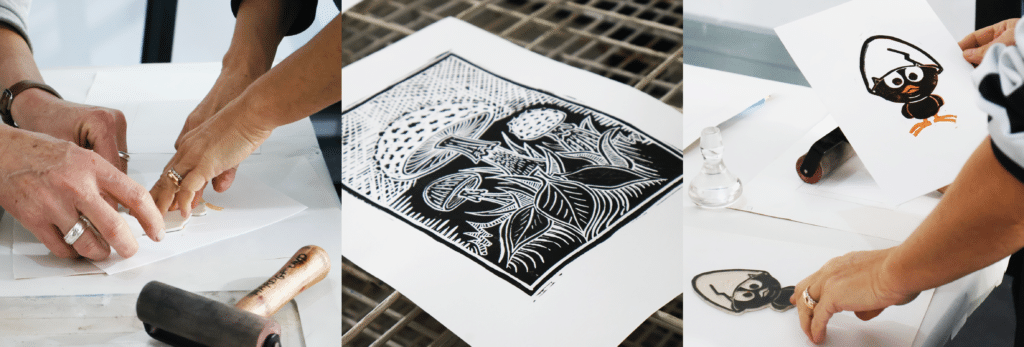
4 / What was the most rewarding moment for you during the latest session? Nothing compares to the excitement of pulling those very first prints during a workshop. Watching that initial awe transform into a full day of energetic printing, creative experimentation, and all the exciting one-of-a-kind artworks is amazing. Every workshop has its own charm, made all the more memorable by the incredible group of participants.
5 / Why are tactile, physical art workshops becoming so popular among modern creatives living in a digital world? Participating in a hands-on art workshop provides a creative solution to our increasingly screen-centred daily routines. It creates space to pause and reconnect with the pure joy of making something tangible by hand. Surrounded by other creative individuals, you can embrace the creative process and enjoy every valuable moment of creating a unique, one-of-a-kind artwork.
Join the Next Creative Workshop at CTCA
Whether you want to build a portfolio for tertiary studies, discover a new creative medium, or simply step away from digital screens for an inspiring weekend in the V&A Waterfront, CTCA workshops offer the perfect entry point.
Quick Workshop FAQ
What are CTCA workshops? CTCA workshops are short, intensive, hands-on creative masterclasses hosted at the Cape Town Creative Academy in the V&A Waterfront. Guided by industry-active lecturers and celebrated artists, these 1-to-2-day weekend sessions cover specialised creative disciplines like printmaking, photography, Scandinavian-inspired woodworking, framing, and product prototyping.
Who can attend creative workshops in Cape Town at CTCA? The CTCA weekend workshops are designed for curious makers, open to everyone from high school students (16+) and prospective tertiary art students looking to build a portfolio, to practising professionals and curious adults seeking to develop new artistic skills in a studio environment.