Please rotate your device back to portrait mode for the best experience.
Skip to content
Inner Image
Inner Image
why we teach
our philosophy

Today’s world requires talented people with specific skills, tools, and methodologies to navigate the complexities of the rapidly-evolving information age. The Cape Town Creative Academy offers four acclaimed and accredited degrees that provide the competencies needed to thrive in the fast-changing contemporary creative landscape.

Our small classes afford our world-class teaching staff to give specialised attention to support and develop each student’s unique talents and interests. Our approach to education is to begin with the fundamentals: all of our degrees share an important foundation semester to expose students to different areas of study and modes of making so as to make an informed decision about their specialisation. From there, our students curate their own learning journey through the selection of electives that complement their chosen paths.

Industry relevance and employability is of utmost importance to our philosophy, and we consistently foster the most highly skilled, award-winning creative minds. Our nuanced programmes are designed with consultation and insights from the South African creative industry, and our content is constantly evolving to respond to the changing landscapes. Additionally, our final-year students complete an internship or apprenticeship which provides them with invaluable working-world experience and networking opportunities before they have even left our halls.

meet the faculty

The CTCA’s team of experienced educators balance industry expertise with specialised learning activities.

academic head

Dr Francois Jonker

As the co-founder and Academic Head of the CTCA, Francois is well versed in the strategic development of learning programmes, curricula and teaching methodologies. Francois’ style of facilitation is characterised by a firm belief in the power of play and a tremendous passion for creating opportunities for trans-disciplinary creative collaboration. Francois’ personal research interests centre around pedagogical response-ability as a condition for transformative learning. For Francois, this framework emerges from the diffractive interception of Critical Posthumanisms, Feminist New Materialisms, and Critical Pedagogy. Francois’ creative and artistic practices include experiments and explorations with painting, drawing, video and publication design.

coordinator learning and teaching

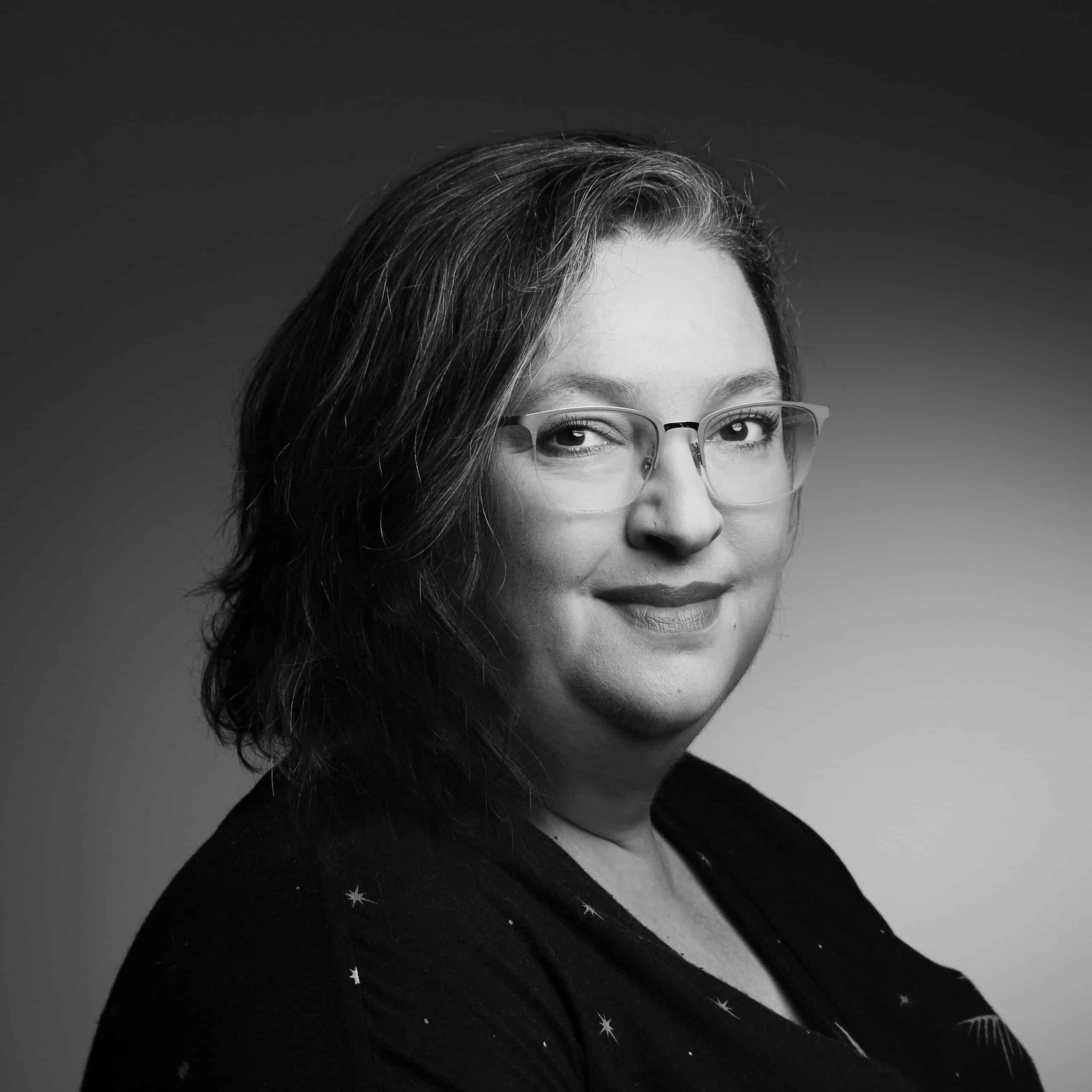
Esti Joorst

Esti, the Coordinator of Learning and Teaching, combines her passion for photography and education with a meticulous approach to academic operations. Since first witnessing the magic of images appearing in red-lit chemical trays at the Peter Clarke Centre’s darkroom several decades ago, Esti has been on a mission to explore every aspect of photography, working as a lens-based artist, commercial photographer, and photography/ visual literacy lecturer. This deep engagement with the visual arts ignited a drive to optimise educational processes, leading her into the operational side of higher education quality assurance. Esti is committed to delivering quality higher education while also pursuing her interests in neurodiversity, archival imagery, comedy, and Olympic-style weightlifting.
programme coordinator: Bachelor of Arts in Contemporary Art

Julia Rosa Clark

Julia is deeply invested in the Contemporary Art programme, which she has grown, developed, and coordinated since its inception in 2017. With over two decades of teaching experience, Julia has lectured and taught various disciplines, including painting, art history and discourse, printmaking, curatorial practice, graphic design, and drawing, across multiple educational levels (pre-primary to Master’s degree) at various institutions in Cape Town. As a practising artist, she has presented several solo exhibitions and exhibited both locally and internationally. Her artworks explore and critique contemporary cultural consumption, knowledge systems, value, and the consequences of late capitalism, often through immersive installations incorporating found objects, collage, everyday materials, humour, and repetition. Additionally, Julia has curated exhibitions, collaborated with arts collectives, and contributed to various design projects in diverse roles.
programme coordinator: Bachelor of Arts communication design

Clayton Sutherland

Clayton is one of the most esteemed design educators in South Africa. He has been responsible for developing some of the most innovative curricula and has guided more students to produce award-winning work than any other lecturer in the country. After teaching at all the other top institutions in the country, Clatyon has found his home at the CTCA. As Programme Coordinator of the Communication Design degree, Clayton has consistently produced graduates adept at strategic, conceptual thinking and work that’s crafted to the highest level who go on to impressive careers. Clayton also gets his hands dirty, delving into handbuilt ceramics, and who despite continued begging, still refuses to start classes for his friends.
programme coordinator: bachelor of arts in interaction design

Walt Geldenhuys

With over a decade of experience in UI/UX design and web development, Walt thrives at the intersection of creativity and technology. Walt’s teaching style is hands-on and driven by innovation, encouraging students to embrace the full design process – from mapping complex systems to building sleek prototypes. By embracing the lessons of human-centered design, he shows students how to truly appreciate usability, pushing them to explore uncharted creative frontiers in a rapidly evolving digital landscape.

programme coordinator: bachelor of arts in motion design

Lodi Paul Inga

Lodi is the programme coordinator of the Motion Design degree at CTCA. Lodi’s wide-ranging technical skillset is complemented by his passion for fostering creative innovation in students. He brings a dynamic understanding of visual communication to the classroom, with expertise across design, animation, film, and 3D visualisation. Lodi’s excellence in education has been widely recognised, earning him the Top Lecturer Award at Inscape Education Group in 2020, 2021, and 2023, as well as the prestigious Vuvuzela Award for academic contribution. Lodi is also an award-winning filmmaker, with his 2023 experimental multimedia short film, “The Last Train”, garnering seven local and international awards at film festivals. In his spare time, Lodi is a talented musician, songwriter, composer, and master storyteller.
programme coordinator: foundation course, course coordinator: illustration
Wiehan De Jager
Apart from being a lecturer at the CTCA since its inception, Wiehan is a senior visual communication designer, illustrator, art director and artist, specialising in producing visual aids and communicative media elements to clients from diverse industries around the world. With over 20 years of experience, Wiehan is a conceptual explorer and visual interpreter. He calls himself a print, paper, mark-making, typography and packaging fanatic. Wiehan is a communication design specialist, consultant and teacher with award-winning results. In his free time, Wiehan can be found in his art studio or next to the printing press. His work has been included in exhibitions and collections locally and abroad.
course coordinator: academic skills and research practice

Desré Barnard

Desré has been teaching in higher education for over a decade at several private and public institutions. Armed with a critical and inquisitive mind, they contribute to teaching and developing Contextual Studies modules on undergraduate and postgraduate levels in subject matter ranging from Visual Cultural Studies, Gender and Queer Studies, Feminism, Posthumanism, Philosophy, and more. As Research Practice Coordinator, their focus is on fostering the next generation of academic minds. Their passion for theory and critique inspires students to think deeply about the curiosities of contemporary culture as we progress further into the next phase of the world. Desré’s personal research is focused on the ethical deployment of generative artificial intelligence, what genAI means for the creative sector, and how best to incorporate genAI into learning and teaching to put our students ahead of the game.
course coordinator: contextual studies
Larita Engelbrecht
Larita is an academic with a special interest in Cultural Studies, Critical Theory and Contemporary Art. She teaches and develops various Contextual Studies modules on undergraduate and postgraduate levels in courses covering Semiotic Theory, Modernism, Postmodernism, Digital Culture and Environmental Humanities. For more than a decade, her attentiveness to the complexities of visual culture has motivated students to become curious cultural practitioners. In addition to teaching, Larita is also a practising visual artist specialising in painting and collage. Her work has been included in a number of group exhibitions locally and abroad. As an art history nerd and aficionado of contemporary art, Larita’s enthusiasm for all things visual feeds into her daily activities.
course coordinator: 3D visualisation
Jarrod Hasenjäger
Jarrod is the course coordinator for 3D Visualisation and Animation at CTCA. With over a decade of professional experience in the industry, he has worked on everything from blockbuster live-action films such as The Avengers to acclaimed animated projects like The Highway Rat, as well as numerous TV series and commercials. His expertise spans modelling, texturing, look development, and compositing, with a speciality in creating both character and hard surface models for film and VFX. An award-winning educator, he has been recognised as the top-ranked lecturer by The Loeries in 2021, 2023, and 2024, and achieved a second-place ranking in 2022. His teaching is driven by a passion for innovation in the classroom and a genuine commitment to inspiring students, fostering their growth by sharing his own enthusiasm for the craft. Beyond the classroom, he continues to find success and growth working on personal projects while being a cat-dad to two demanding little furballs.
course coordinator: makers lab

Philip van der Walt

Philip’s design studio, based at the CTCA, forms the heart of the Makers Lab elective module at the CTCA. Philip is a product artist and designer specialising in additive manufacturing (3D printing) and, over the past two decades, he has honed his craft in product development across a variety of design fields, including medical, jewellery, footwear, fashion, marine and architecture. He utilises advanced CAD modeling, digital sculpting, and additive manufacturing processes to push boundaries in design, research, and development, exploring the potential of these technologies. His medical product development work includes orthotics and prosthetics, surgical tools, implants, and medical devices, with notable projects such as the world’s first 3D-printed middle ear implant. He also develops prosthetic solutions for animals, such as prosthetic limbs, beaks, and surgical products. As a designer and artist, Philip constantly collaborates with others in product art, jewellery, and fashion, with his work appearing on runways and in galleries abroad. He is also developing his own ranges of jewelry and high-end luxury products.
lecturer: contemporary art

Rowan Smith

Rowan is a practising artist and educator. His artistic practice takes the form of a multidisciplinary semiotic investigation into the ways in which cultural signs and signifiers can be read as artefacts. He examines how the meaning embedded in these artefacts fluctuates (and frequently deteriorates) in relation to ever-shifting sociopolitical contexts, often assuming a self-critical position which responds to his locality. He has participated in numerous exhibitions, both in South Africa and abroad. As an educator, Rowan has been teaching at tertiary institutions throughout Cape Town since 2014, often focusing on sculptural practices as well as the location of meaning in the production and interpretation of artworks. At CTCA, Rowan has taught and developed course modules that range from mould-making and carpentry, to sound production and digital fabrication.
student success advisor

Lizl Roos

Lizl is a versatile creative practitioner with expertise in illustration, printmaking, and visualisation techniques. In addition to her 30 years of experience in teaching, lecturing, and programme coordination, Lizl is also a notable South African artist, with her artworks featured in various corporate and private collections worldwide. As a Student Success Advisor, Lizl is deeply committed to championing student success, earning her the affectionate moniker of “campus mom” for her exceptional care, attentiveness, and dedication to the students at CTCA. When not in her coastal studio behind the easel, Lizl is either reading, listening to music, walking on the beach or watching arthouse cinema with a good strong Italian coffee.
registrar

Thandile Mkhunqa

Thandile brings a wealth of experience and dedication to her role as Registrar. With her background in public management, which focuses on developing and implementing policies, managing resources, and ensuring service delivery, Thandile takes pride in her exceptional organisational skills and dedication to student success. Before serving in a senior, cornerstone position of Registrar, Thandile was involved in managing student affairs and academic processes. Now she oversees all institutional systems, student registrations, and academic records. She is an active member of the Academic Board. Trusted and loved by students and staff alike, Thandile really is the one who keeps the ship running.
educational model
The CTCA relies on a distinctive transdisciplinary educational model to develop and present accredited degree programmes that address the current and future needs of the creative industries and endeavours to develop and sustain a distinctive student-centred learning environment that integrates tried and tested methodologies from the following educational models:

THE TRADITIONAL UNIVERSITY MODEL

The CTCA’s academic offering is founded in a broad theoretically rigorous foundation that is typically associated with traditional humanities departments, and engages students with critical thinking and academic research and argumentation.

THE INDEPENDENT ART SCHOOL MODEL

Within the intimate setting of small, practice-driven classes, students are guided through the development of a sophisticated and specialised understanding of aesthetics, critical concept development and creative problem solving.

THE TECHNICAL TRAINING COLLEGE MODEL

Through a focus on technological innovation and the development of exceptional craftsmanship, the CTCA produces graduates with a diverse professional toolset geared for the challenges and opportunities of the contemporary creative industry.

THE BUSINESS SCHOOL MODEL

A bespoke offering of modules in Business Studies/ Professional Practice provides students with strategic operational and planning skills as well as sector-specific business acumen.

THE APPRENTICESHIP MODEL

A compulsory programme of internship or apprenticeship training offered in the final year of study, provides students with working-world experience, so as to prepare them for the daily challenges of a professional career in the creative industry.